
Vitalis
Simplifying care for chronic conditions
Project Context
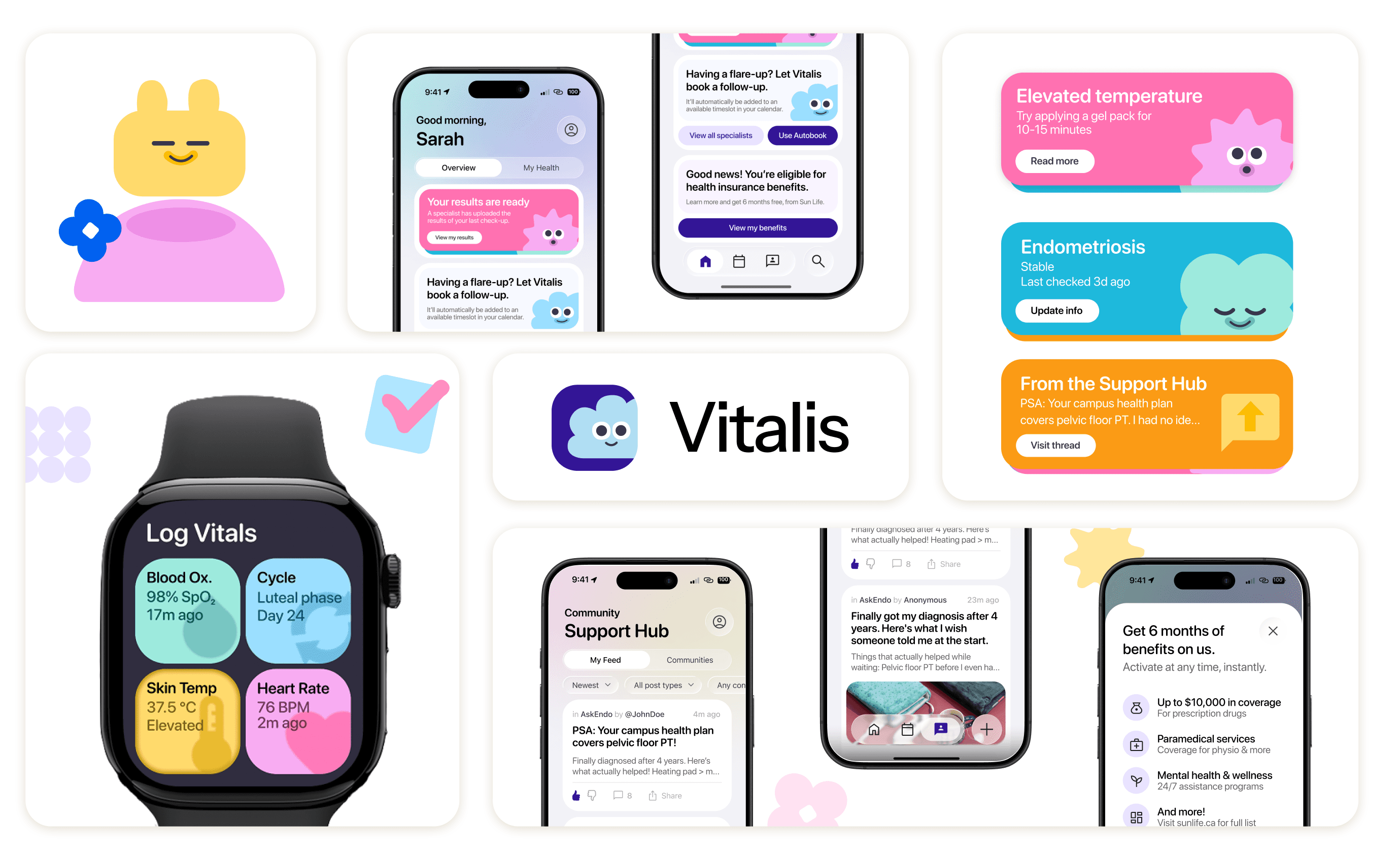
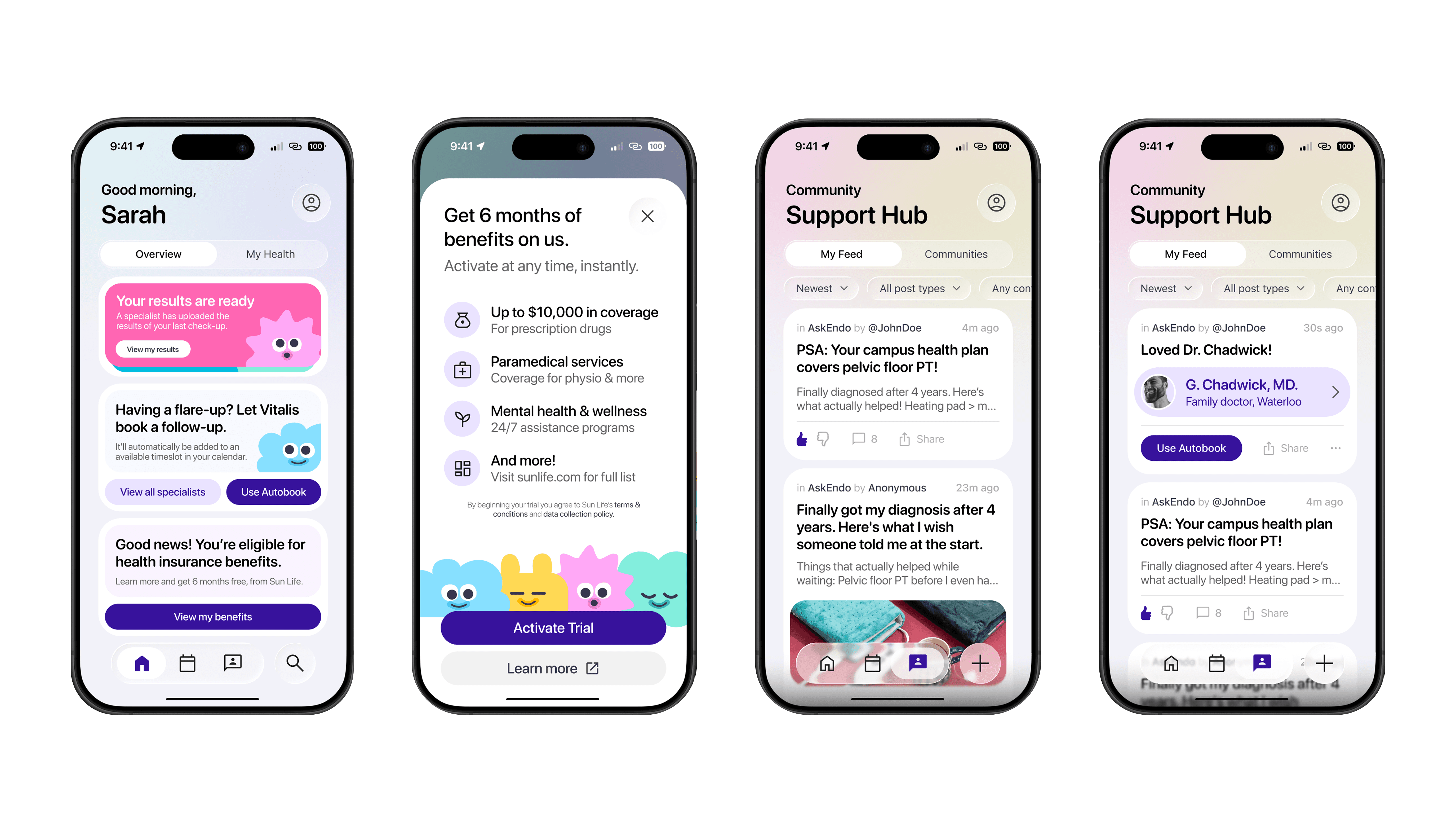
Vitalis focuses on supporting patients newly diagnosed with chronic conditions. The app streamlines booking, benefits guidance, health tracking, and community support, with an optional feature that connects users to Sun Life for personalized benefits information.
Timeline
72 hours
Background
Vitalis was created during a fast-paced three-day designathon focused on rethinking how digital tools can support individuals newly diagnosed with chronic conditions. I led the branding and visual design, working alongside Darren Millar, who did the interface design to shape both the product experience and its overall identity.
The Problem
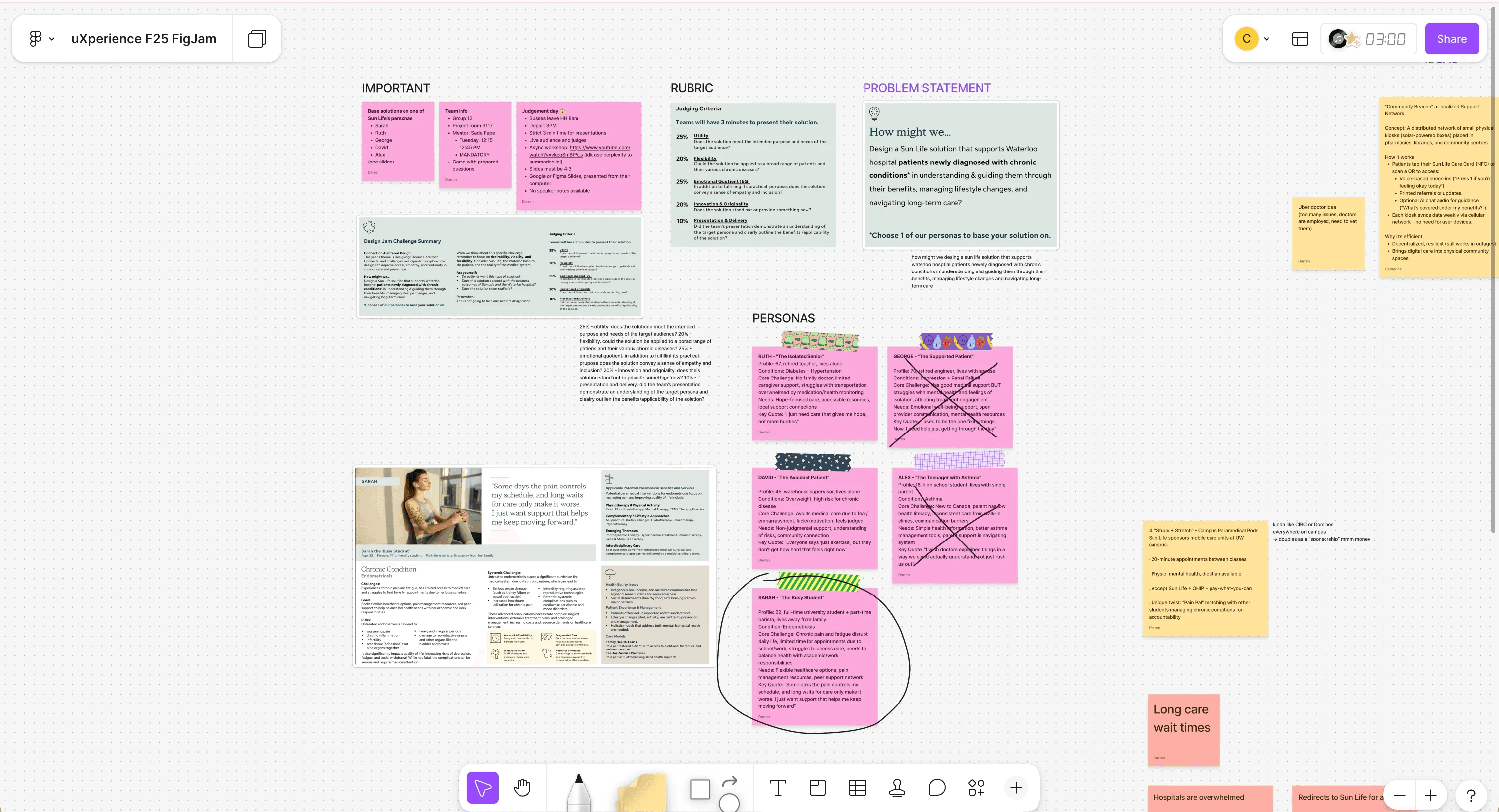
How might we design a Sun Life solution that supports Waterloo hospital patients newly diagnosed with chronic conditions in understanding and guiding them through their benefits, managing lifestyle changes and navigating long-term care
Process
Research
Tool(s) Used:
FigJam
We began by reviewing a set of predefined personas and selecting one to guide our design decisions. We chose Sarah, a university student newly diagnosed with a chronic condition. Designing for someone in a similar life stage allowed us to apply real empathy and realistic thinking, grounding our decisions in how students actually manage school, health, and independence. From there, we expanded our focus to the broader system.
Macro Problem
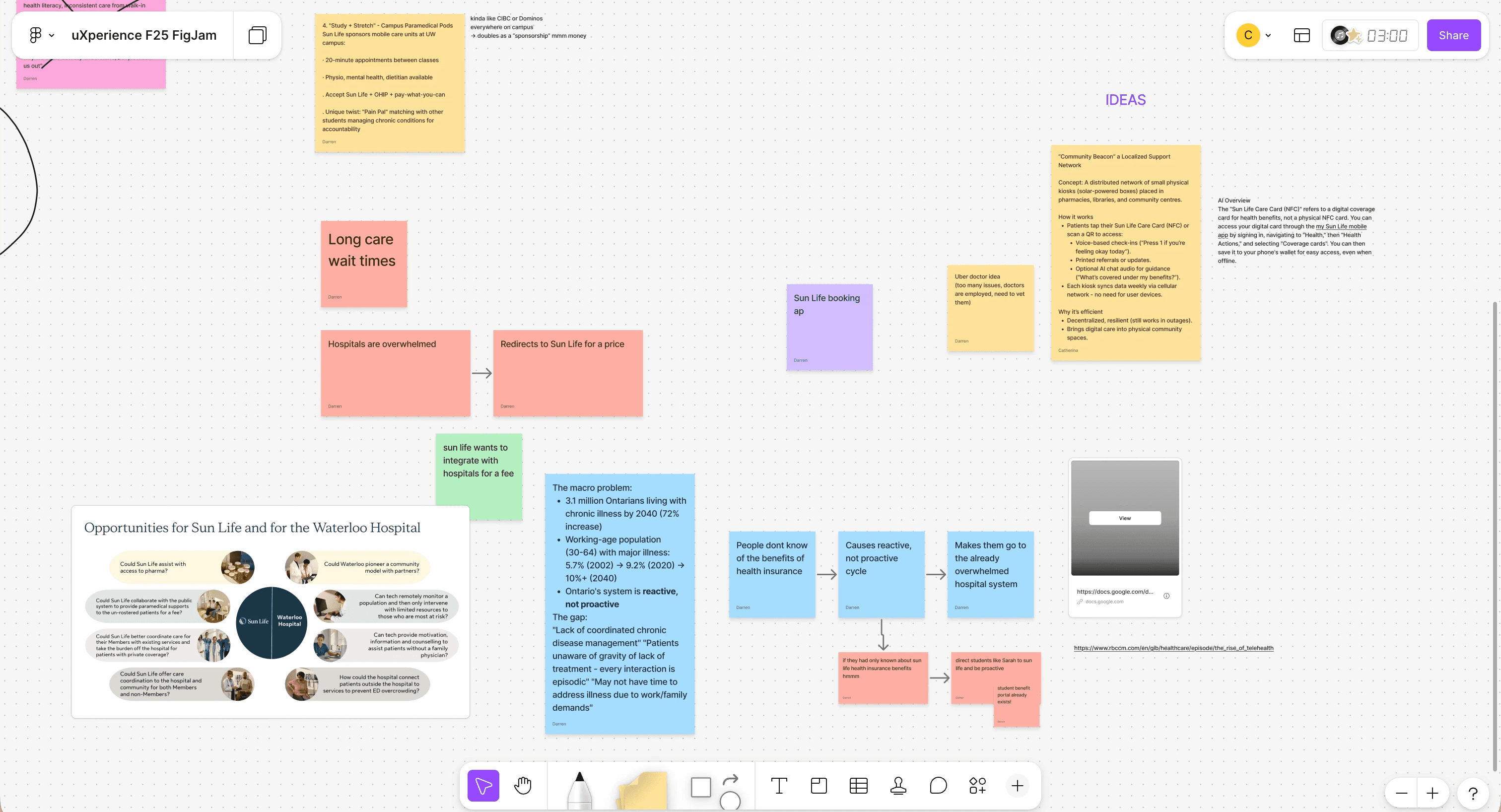
Chronic illness in Ontario is rapidly increasing (projected 3.1M by 2040)
The healthcare system is largely reactive, not proactive
Identifying the Gap
Through our research, we identified several key gaps:
Lack of coordinated chronic disease management
Healthcare interactions are often episodic, not continuous
Patients may not fully understand the long-term consequences of delayed care
Many individuals lack the time or capacity to prioritize their health due to school, work, or family demands
Low awareness and understanding of insurance benefits, even when coverage exists
This creates a cycle where patients delay care, leading to worsening conditions and increased reliance on already overwhelmed hospital systems.
Opportunity
Many students already have insurance (e.g., Sun Life) but don’t use it effectively.
Vitalis focuses on making these benefits visible, understandable, and actionable, guiding users toward more proactive, consistent care through a simplified flow.
Design
Tool(s) Used:
Figma
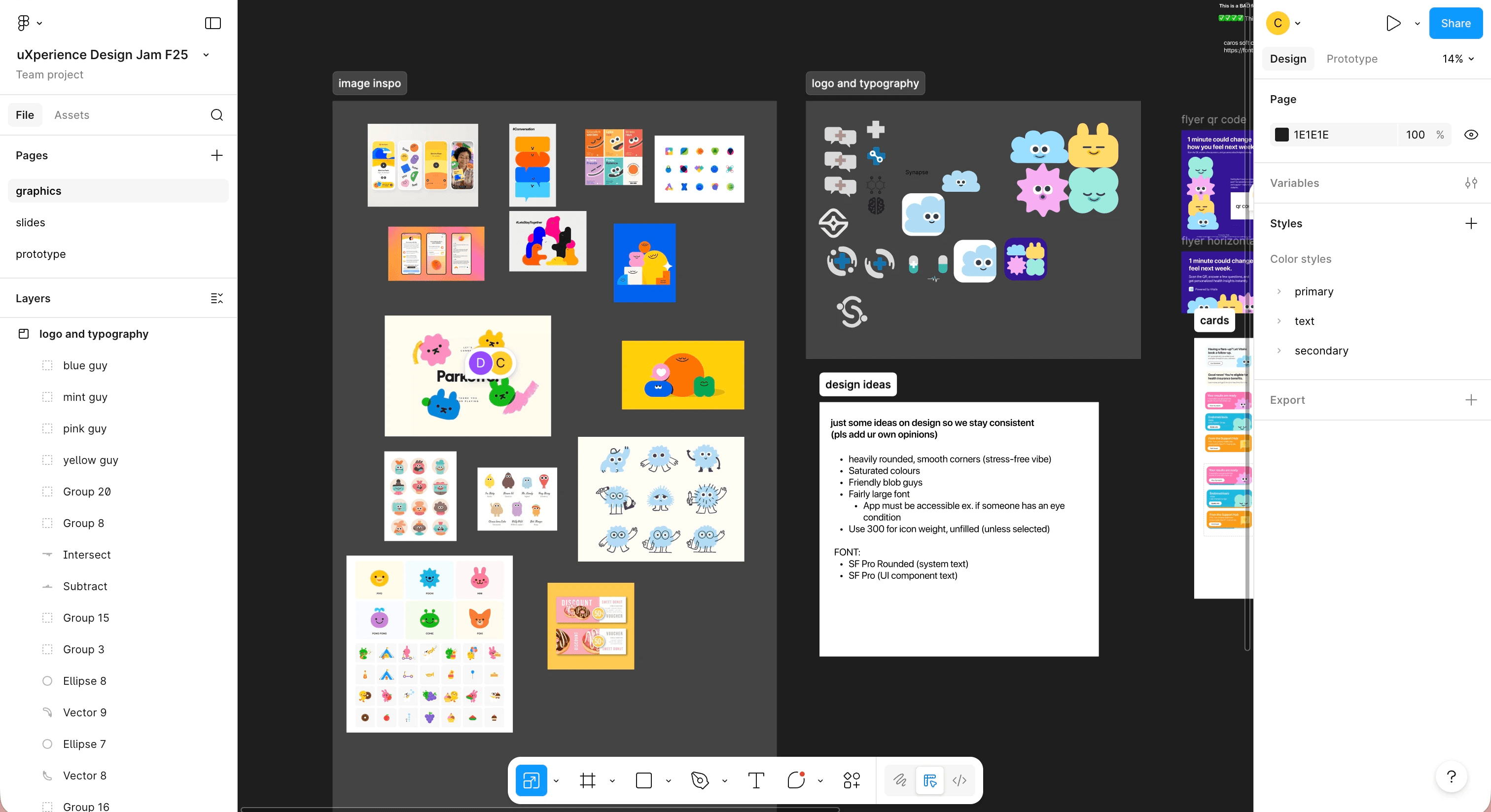
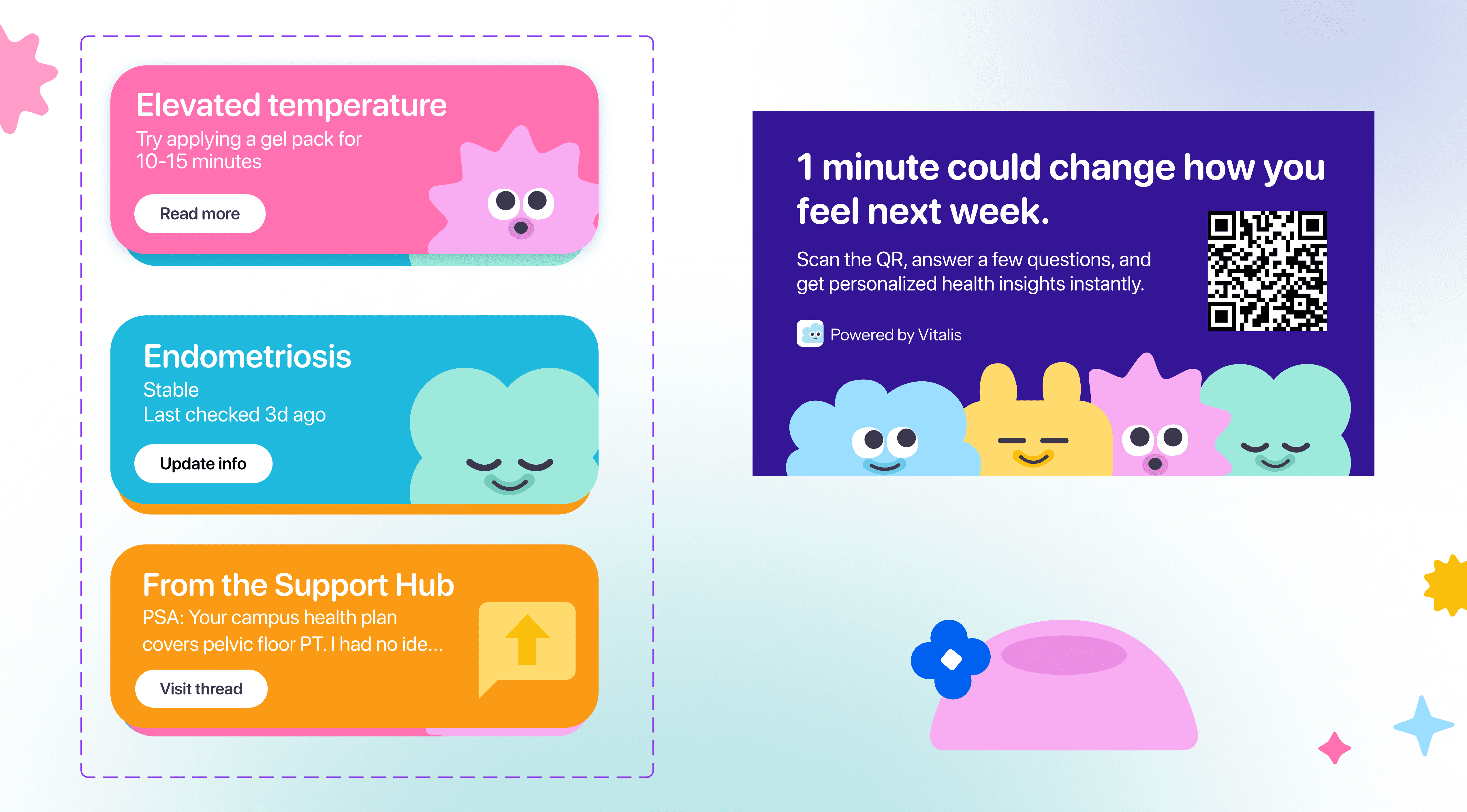
I drew inspiration from Headspace, particularly its ability to communicate softness and ease through color, illustration, and tone. For Vitalis, I translated this into a visual system that is colorful, warm, and friendly, helping reduce the clinical feel often associated with healthcare and making the experience feel more inviting and supportive for everyday use.
Iterations
Tool(s) Used:
Figma
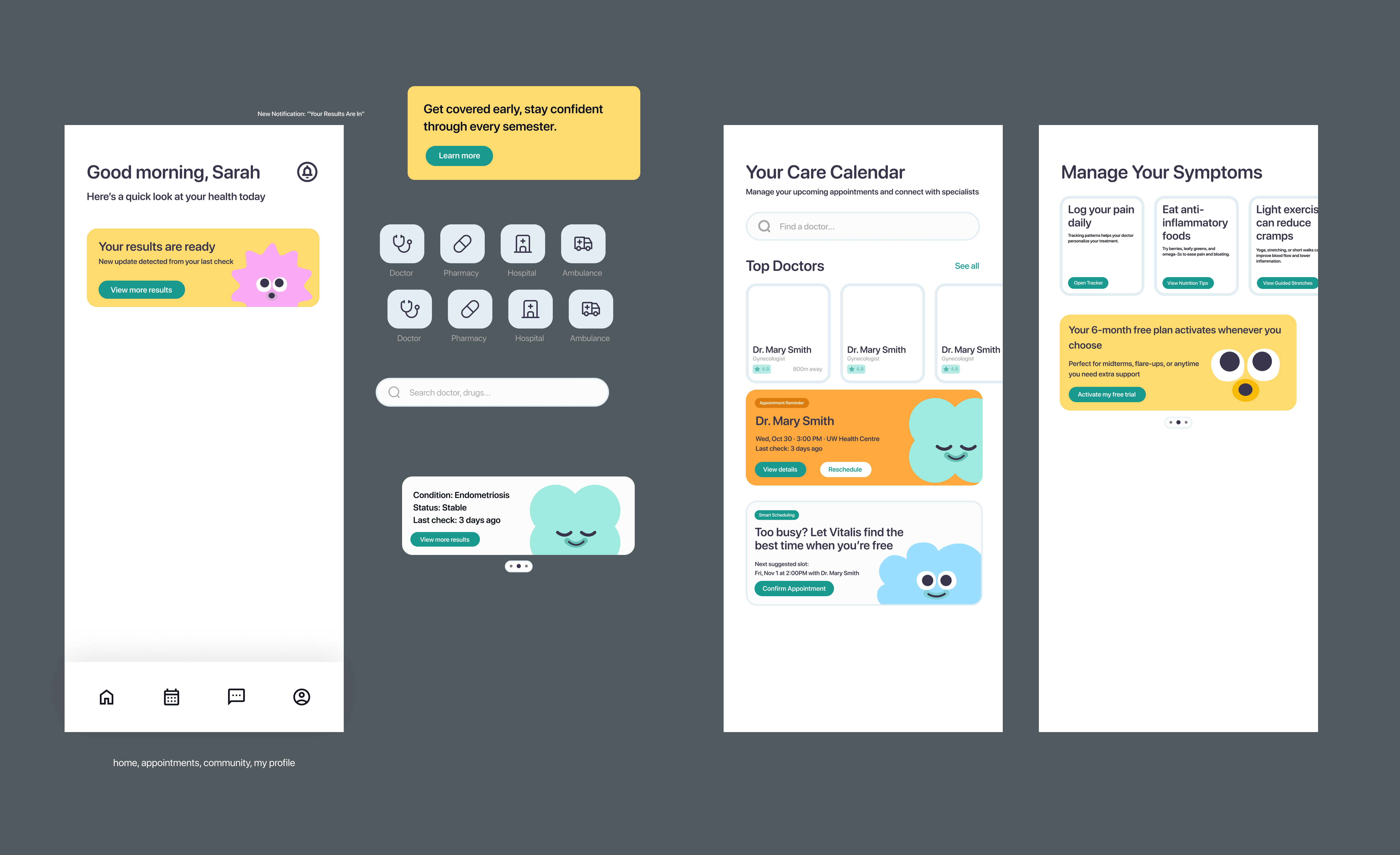
In the early stages, I explored multiple design drafts to establish direction. A key challenge I encountered was maintaining visual cohesion, as well as avoiding overcrowding screens with too much information. These early iterations helped refine a more focused, simplified approach.
Solution
Key Takeaway
Trust comes from transparency, not just automation. While intelligent features can enhance the experience, users need to clearly understand how decisions are made. Giving users visibility and control helps build confidence, especially in sensitive contexts like healthcare.